Microwave Not Heating: Fuse, Door Switch and Parts
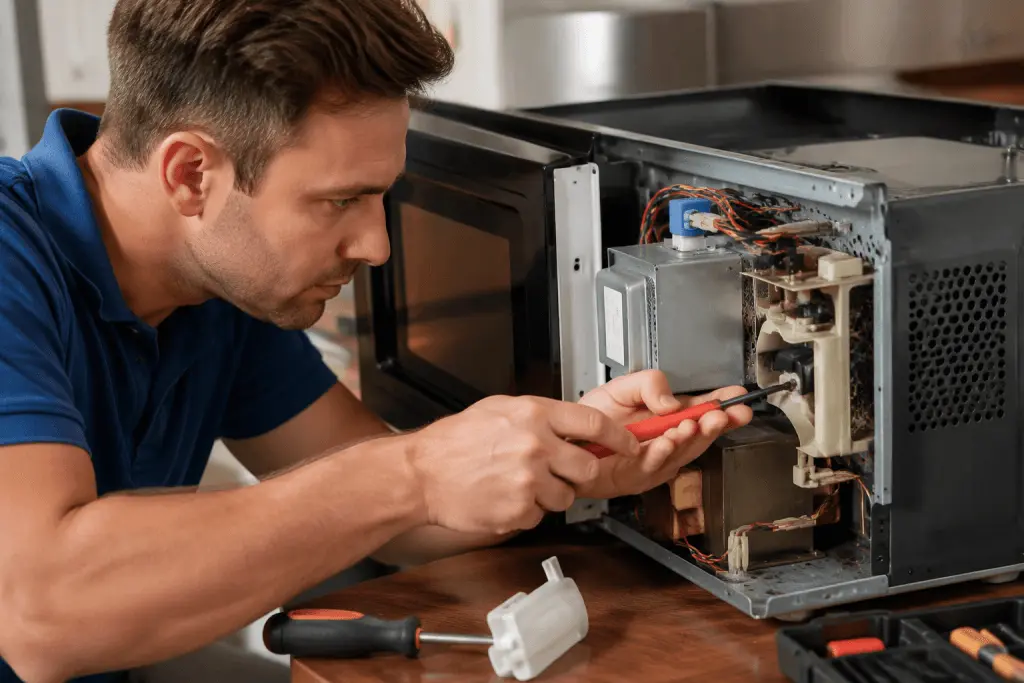
A microwave not heating is annoying when it still turns on, spins the plate and lights up, and the possible faults range from a cheap switch to a part that is not worth fixing. This guide helps you work out which side of that line you are on, and tells you where the safe checks end.
A safety note first
With a microwave not heating, the temptation is to open the case. Inside is a high-voltage capacitor that can hold a dangerous charge after the unit is unplugged, and the U.S. Consumer Product Safety Commission warns about the electrocution hazard of do-it-yourself microwave repairs. Opening the case is for technicians. Everything in the safe checks below can be done without removing a panel.
Safe checks for a microwave not heating
- Test with water. Put a cup of water in the microwave and run it for one minute. Do not run it empty. If the water barely warms, the heating circuit is not working.
- Check the power level. It sounds basic, but someone may have set it to a low level, or the unit may be in a demo mode.
- Look at the door. Does it latch fully? Is the latch broken, or is there food on the seal? A door that doesn’t close correctly can keep the unit from running or cause it to run without heating.
- Check the display. Error codes, a blank display or unresponsive buttons point to a control board rather than a heating part.
- Listen. A normal microwave has a low hum when heating. If you hear the fan and turntable but not the hum, the high-voltage side is not firing.
What each failed part looks like
A microwave not heating usually traces back to one of these parts.
| Part | Typical symptom | Notes |
|---|---|---|
| Door switches | Dead entirely, or runs only if you press on the door | Small parts, but replacement is a technician job |
| Thermal fuse or high-voltage fuse | No power, or powers on but no heat | A blown fuse can be a sign of something else failing, such as a shorted diode |
| High-voltage diode | Runs, no heat, sometimes a loud hum | Capacitor danger, technician only |
| Magnetron | Runs, no heat; buzzing or sparking | Usually the most costly part |
| Control board | Buttons dead, erratic display | Cost depends on the model |
Why a fuse matters
Do not replace a blown fuse with a bigger one, and never bridge it with wire. The fuse blows to protect the circuit, and a repeat blow usually means a failed component behind it. On a microwave not heating, a technician tests the diode, capacitor and magnetron before fitting a new fuse.
Sparks, burning or smells
Stop and unplug the microwave if you see arcing, smell burning, or see a burn mark inside the cavity. Small sparks are sometimes caused by metal in the unit, a gold-rimmed plate, or a damaged waveguide cover (a stiff paper-like panel on the side wall). A greasy, cracked or burnt waveguide cover can be replaced, but if the sparks persist the magnetron may be damaged. Do not use it.
Repair or replace?
The decision on a microwave not heating depends on:
- The type. A countertop unit is usually cheaper to replace than a major repair. Over-the-range and built-in units are harder to swap out, and repair is often more attractive.
- The failed part. A door switch or fuse is a different decision from a magnetron.
- The age and condition. A microwave with a worn interior and failing control board is a poor candidate for a larger repair.
With a microwave not heating, ask for the diagnosis before deciding, and if you do replace it, see appliance installation for built-in and over-the-range units. We list what we cover on our microwave repair page. If it is a built-in, appliance disposal may help with the old one.
Care that makes it last
- Wipe spills promptly. Food baked on near the door seal and the waveguide cover causes arcing.
- Cover food so splatters do not build up.
- Do not run it empty or with metal in it.
- Steam a bowl of water with lemon for a few minutes to loosen grime, then wipe.
- Do not slam the door; the latches and switches take most of the wear.
- Keep the vents clear, especially on an over-the-range unit where the grease filter collects kitchen grease.
When to stop
- The door is bent, will not latch or the seal is damaged. Do not use it.
- Sparks, smoke or a burning smell.
- You are about to remove the cover.
If you would rather have it looked at, book at /book/ or call (916) 582-7791 and ask for the next available window. The service call is $80, paid at your home or with PayPal or a credit card.
Common questions
Why does my microwave run but not heat?
Commonly a failed high-voltage diode, a blown fuse or a failed magnetron. A technician can test these safely.
Is it safe to open a microwave to check the fuse?
No. The high-voltage capacitor can hold a dangerous charge even when unplugged. Leave it to a technician.
How do I test if my microwave is heating?
Run a cup of water for one minute. Never run the microwave empty. If the water stays cold, the heating circuit is not working.
Is it worth repairing a microwave?
It depends on the type and the failed part. A door switch is a different decision from a magnetron, and a countertop unit costs less to replace than a built-in.
Related guides
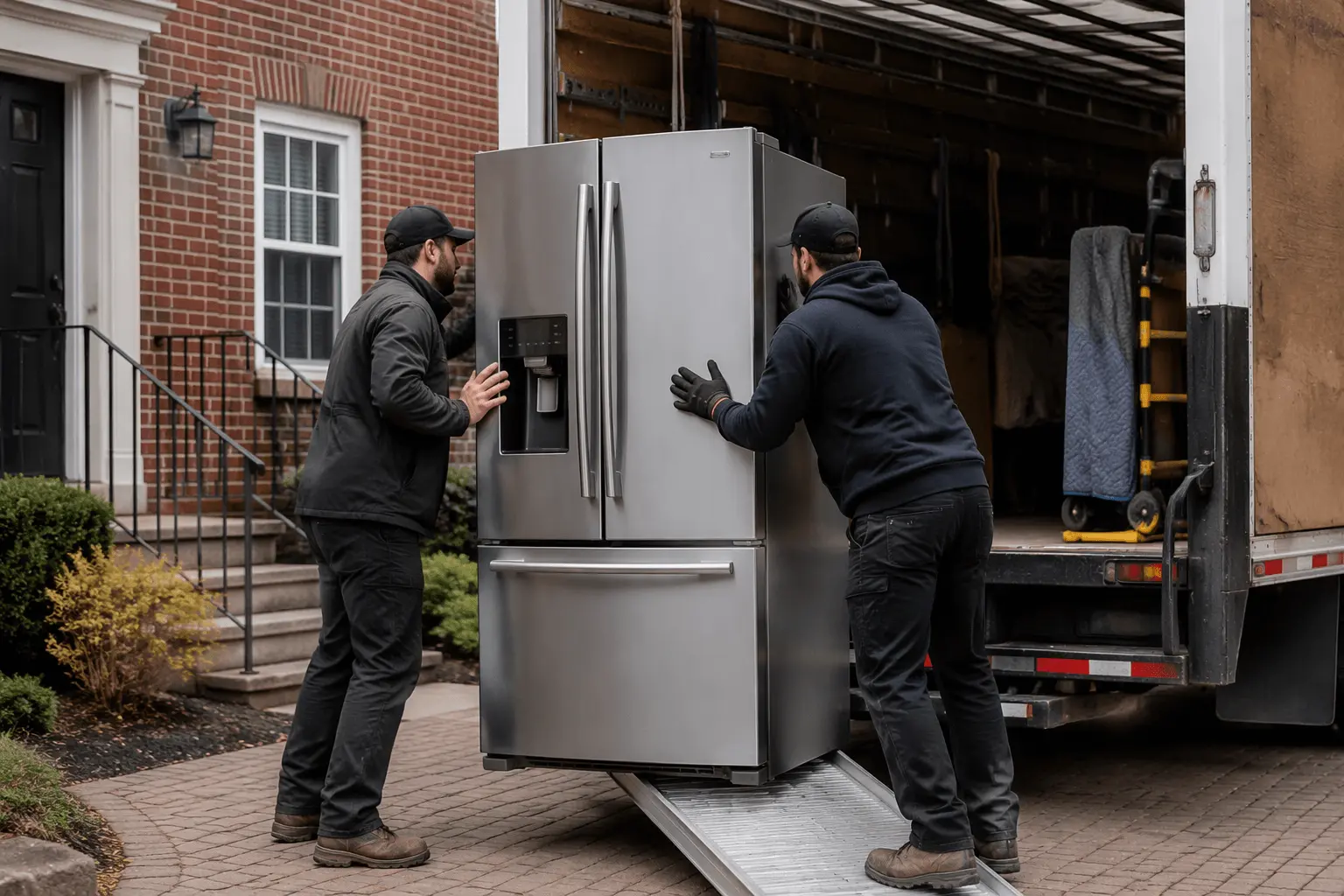
Appliance Disposal in Sacramento: Your Options for Getting Rid of an Old Unit
Retailer haul-away, city and utility programs, scrap yards and refrigerant rules: how to dispose of an old appliance in the Sacramento area.
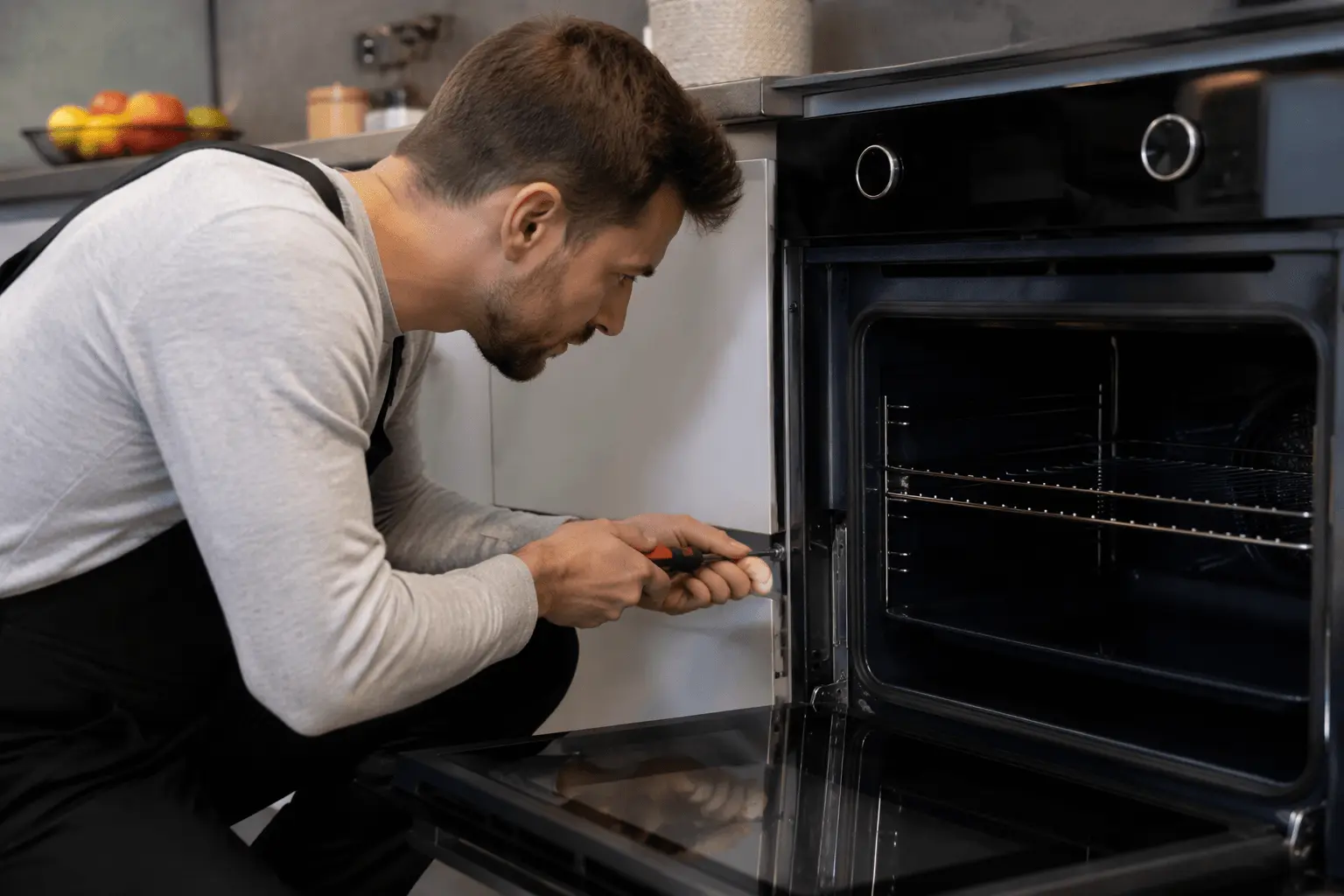
Oven and Range Cooking Unevenly: Causes and Fixes
Hot spots, one side browning faster, or burnt bottoms: the usual causes of uneven oven heating and what to check first.
Getting Your Appliances Ready for a Sacramento Summer
Sacramento summers are hot and dry. A before-summer checklist for your fridge, freezer, ice maker, dryer and washer, with safe tests.