
Washer troubleshooting: what to check before you call
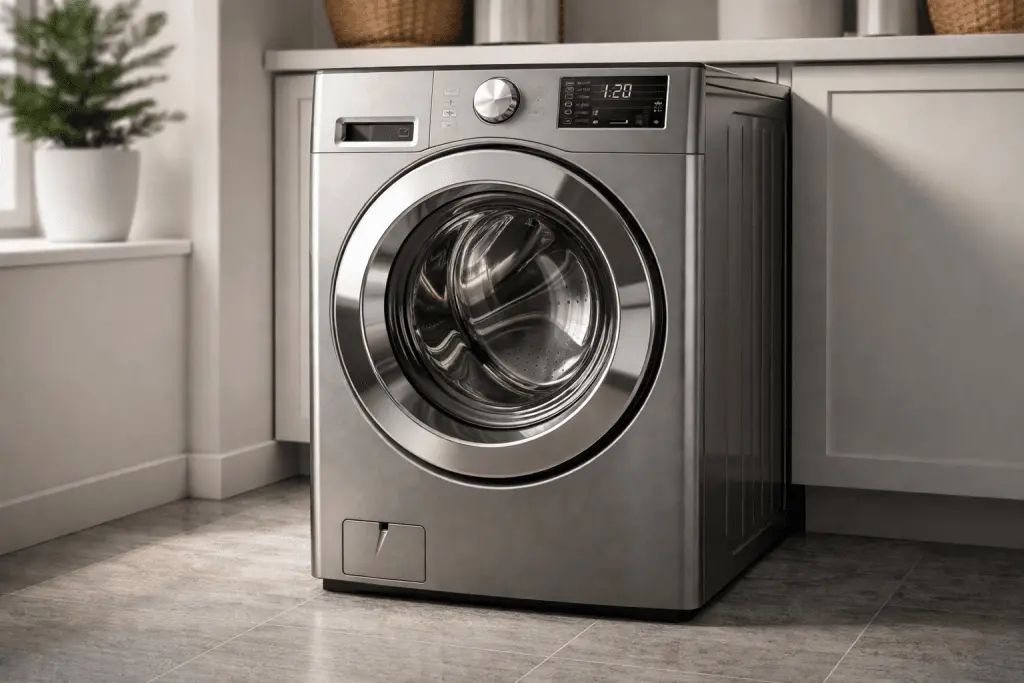
Washer troubleshooting starts with sorting the problem into one of five groups: it will not start, it will not fill, it will not drain, it will not spin, or it leaks. Work out which group you are in before you touch anything. The checks below go from easiest and safest to the ones that need a technician.
Table of Contents
Washer troubleshooting: start with the basics
Before any washer troubleshooting, rule out the boring causes.
- Is the washer plugged in firmly, and does the outlet work? Plug in a lamp to test it.
- Is the door or lid fully closed? A worn latch or lid switch makes the washer behave as if it were open.
- Is the cycle paused, or is a child lock or control lock on? Many washers lock the panel after a long press of one button.
- Are both water taps fully open?
Power the washer off at the wall for a minute, then try again. That clears some temporary control faults.
It will not start
If the panel is dead, the problem is usually power: the outlet, the cord, or a tripped breaker. If the panel lights up but nothing happens when you press start, suspect the door latch or lid switch. You can often hear a click when a good latch closes. No click, or a door that closes but will not stay locked, points to the latch assembly.
A control board fault is possible, but it is the last thing to blame. Latches fail far more often.
It will not fill, or fills slowly
Check the taps first, then the two hoses behind the washer. A kinked hose slows the fill. If you are comfortable doing it, switch the washer off, unplug it, shut the taps, unscrew a hose from the back of the washer and look at the small mesh screen in the inlet. Grit and mineral flakes collect there. Rinse the screen, refit the hose by hand plus a small extra turn with pliers, and open the tap slowly while checking for drips.
If the screens are clean and water still does not come in, the water inlet valve is the likely fault. That is a part replacement.
It will not drain
A washer full of standing water is heavy and messy, so be ready with towels and a shallow pan.
- Drain hose. Look for kinks behind the machine and check that the hose is not pushed too far down the standpipe, which can cause siphoning or poor draining.
- Pump filter. Many front-loaders have a small access door at the bottom front. Unplug the washer, put a pan under it, and open the filter slowly. Coins, hair ties and socks end up here.
- Household drain. If other drains in the house are slow too, the problem is not the washer.
If the filter and hose are clear and the washer hums but does not pump, the drain pump itself has probably failed.
It will not spin, or spins badly
An unbalanced load is the most common reason. Stop the cycle, open the door once the drum has stopped, and redistribute the clothes. A single heavy item such as a bath mat or a comforter will cause this. The same washer troubleshooting order applies: balance, then drain, then latch. For a washer that stops spinning altogether, see our article on what to do when a washer stops spinning.
It shakes or is very loud
For noise, washer troubleshooting is mostly mechanical. Pull the washer out a little and check that all four feet touch the floor and the machine does not rock when you push on opposite corners. A new washer that walks across the floor may still have its transit bolts in. Those must be removed. A grinding or squealing noise that continues with an empty drum usually means worn drum bearings, which is a larger repair.
It leaks
Washer troubleshooting for a leak starts with finding where the water is coming from. Dry the floor, run a short cycle, and watch. Common sources are the hose connections at the taps and the back of the washer, the door gasket on a front-loader, an overfilled detergent drawer, and the pump. A leak from a hose connection may only need a washer or a snug fitting. A hose that is bulging, cracked or rusty at the collar should be replaced, not tightened. If water is coming from underneath and you cannot see the source, shut the taps and call.
Smells and residue
In washer troubleshooting, a musty front-loader usually turns out to be a damp gasket and too much detergent. Wipe the gasket after the last load, leave the door ajar, use the amount of high-efficiency detergent the label calls for, and run a hot maintenance cycle with a washer cleaner every month or so.
Stop and call if
- You smell burning or see smoke, or the cord or plug is hot.
- The breaker trips when the washer runs.
- Water is leaking near the electrical parts or the outlet.
- The drum will not turn by hand when the washer is off, or you hear metal grinding.
Good washer troubleshooting includes knowing where to stop. Do not reach into the drum while it is moving, and do not remove panels on a plugged-in machine. For general laundry-room safety, the National Fire Protection Association publishes dryer and washing machine safety tips. If you are weighing up whether a repair makes sense, our washer repair page explains what we service. Hoses are often the cause of leaks, and our washer installation checklist covers how they should be fitted.
If you would rather have a technician look at it, book at /book/ or call (916) 582-7791 and ask for the next available window. The service call is $80, paid at your home or with PayPal or a credit card.
Still dealing with washer troubleshooting? A technician comes to your home and finds the cause. See the pricing page for the service call, or book a visit for washer troubleshooting.
Common questions
Why does my washer not start even though it has power?
The most common cause is the door latch or lid switch not registering that the door is closed. Check for a child lock or paused cycle first. If neither applies, the latch is the likely fault.
How do I clean the washer drain pump filter?
Unplug the washer, place a shallow pan under the small access door on the lower front, and open the filter slowly so the water drains out. Remove coins, lint and other debris, then screw it back in fully. Some top-loaders have no user-accessible filter.
Is a leaking washer safe to keep using?
Not if you cannot find the source. Shut off the taps and unplug the washer, then check the hoses and gasket. Water near the electrical parts or outlet is a reason to stop and call.
Why does my washer shake so much on spin?
Usually an unbalanced load or an unlevel machine. A new washer may also still have its shipping bolts in place.
Related guides
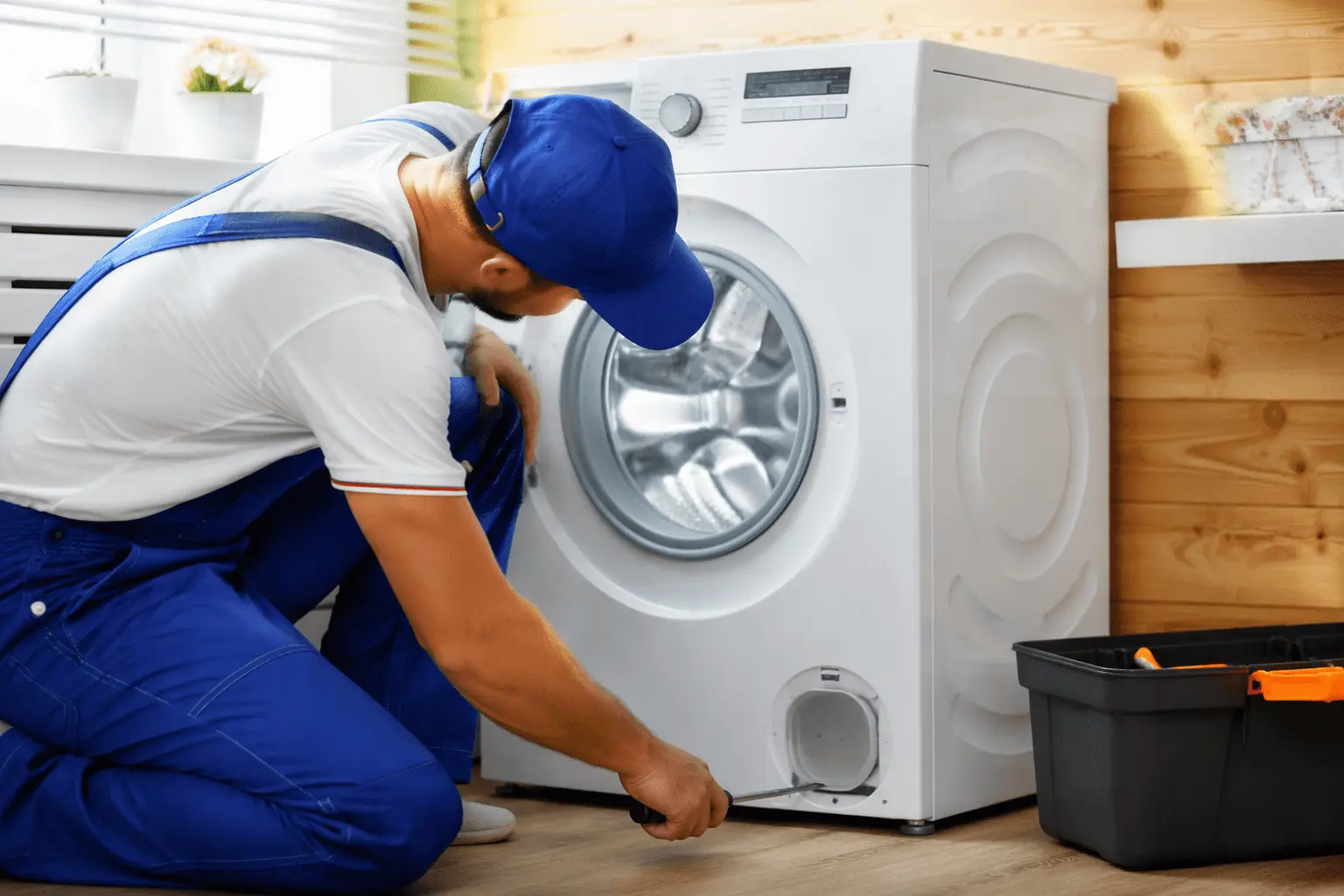
Washer installation checklist: hoses, leveling and the first run
A practical washer installation checklist: space, hoses, drain, shipping bolts, leveling and a leak test on the first run.
Dishwasher Installation: What to Check Before Delivery Day
Measure the opening, check the water, drain and power connections, and know what to ask before your new dishwasher arrives.
Dishwasher Troubleshooting: What to Check Before You Call
A decision order for the common dishwasher problems: won't start, won't drain, dishes not clean, leaks. What is safe to check and when to…