Dishwasher Troubleshooting: What to Check Before You Call
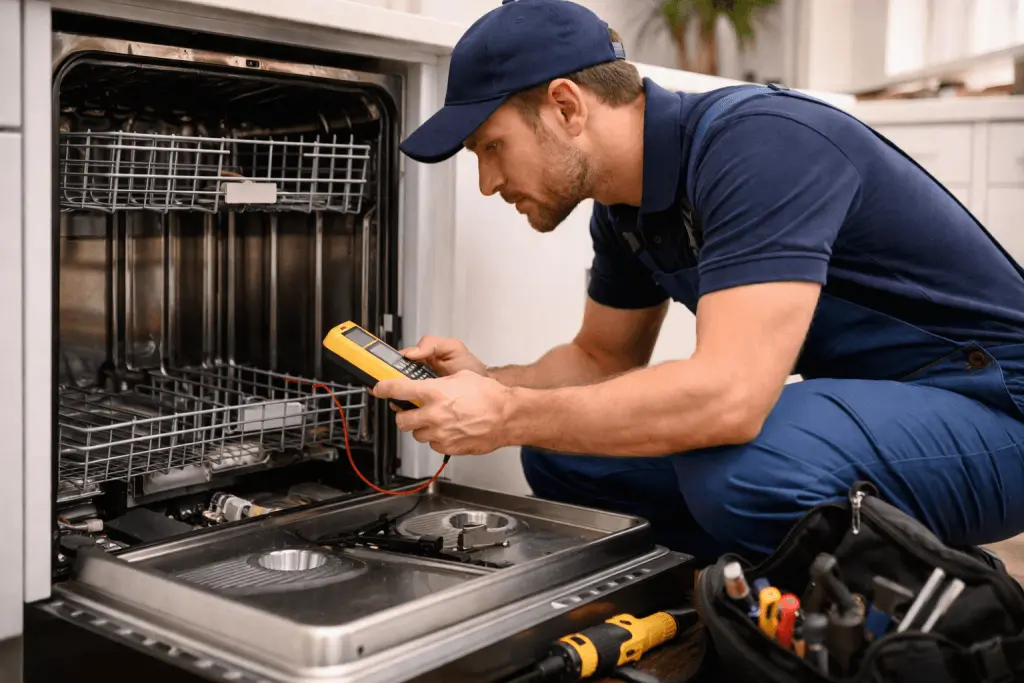
Dishwasher troubleshooting usually starts with one of five complaints: it will not start, it will not drain, the dishes come out dirty, it leaks, or it makes a new noise. Each has a short list of likely causes, and the first two or three checks cost nothing. This is the order I follow for dishwasher troubleshooting.
Before anything else, stop the cycle, then switch the dishwasher off at its breaker or unplug it if you can reach the cord. Never reach into the tub with the power on.
Dishwasher will not start
When a machine is completely dead, dishwasher troubleshooting begins with the simple things, in this order:
- Door latch. Close the door firmly. The latch switch tells the control that the door is shut, and a worn latch or a bent catch is a very common reason for a completely dead panel.
- Child lock or control lock. Many panels lock after a long press. The manual shows the key combination to release it.
- Breaker. Reset it once. If it trips again, stop. A breaker that keeps tripping means a short, often in the heating element or a wire, and the machine should stay off.
- Power at the outlet. If the dishwasher is plugged in under the sink, a disposal or a tripped GFCI on the same circuit can be the culprit.
If the panel lights up but the motor only hums, the pump or motor may be seized. That is a repair job, not a reset.
Dishwasher will not drain
In dishwasher troubleshooting, standing water at the bottom is usually a blockage rather than a failed part. Check:
- The filter at the bottom of the tub. Lift it out and rinse off grease, seeds and label paper.
- The sink. If a double sink backs up too, the problem is the household drain, not the dishwasher.
- The disposal. A new dishwasher connection has a plug in the disposal inlet that must be knocked out. If it was missed, water cannot leave.
- The drain hose behind the machine. It should rise in a high loop under the counter, or connect through an air gap. A kinked hose holds water.
If all of that is clear and the pump does not run, the drain pump or its motor is the likely fault. If you hear the pump running but nothing leaves, a jammed impeller or a broken piece of glass in the pump housing is more likely. KitchenAid’s help page for a newly installed dishwasher that will not drain walks through the same disposal plug and hose checks.
Dishes still dirty
Dishwasher troubleshooting for dirty dishes starts with these four checks, before you blame the machine:
- Spray arms. Pull them off if they lift, and clear the small holes with a toothpick. Check that a tall pot is not blocking rotation.
- Filter, as above. A clogged filter lowers wash pressure.
- Water temperature. Run the kitchen tap until hot before starting a cycle. Detergent works poorly in cold water.
- Detergent. Old tabs and powder that has clumped in the dispenser do not dissolve well. If the dispenser door does not open, the release mechanism is worn.
A white film that wipes off is hard water and responds to a rinse aid and a periodic cleaning cycle. A film that does not wipe off is etching, which is permanent damage to the glass.
Water on the floor
Find where it comes from before you decide. Water at the door usually points to the door gasket or too much suds from the wrong soap (hand dish soap makes foam that escapes). Water from under the machine can be the inlet valve, the hose connections, a cracked spray arm or a failed pump seal. If you cannot tell, turn the water supply off at the shutoff under the sink and leave the machine off. Water and electricity are a bad mix, and a slow leak can ruin cabinet floors and flooring.
Noises
A grinding or rattling sound often means something has fallen into the pump area or a spray arm is hitting a dish. A loud humming at the start of a drain is a pump struggling. Fix it early. Running a dry pump overheats the motor.
About replacement parts
People often ask whether a new part is worth it. The usual parts that fail are the door latch, the inlet valve, the drain pump, the heating element and the control board. Which of these is the cause matters a great deal for the cost, and good dishwasher troubleshooting confirms the control board last, not first, because boards are often blamed for problems that are actually a latch or a sensor. A service call finds out which one it is before you buy anything. Whether to repair or replace depends on the machine’s age and the failed part, and we cover it in signs it is time for a new dishwasher.
When dishwasher troubleshooting should stop
- The breaker trips again after one reset.
- You smell burning plastic or see scorch marks.
- Water is reaching electrical parts or the floor is soaked.
- The control panel behaves erratically after a leak.
In any of these, leave it off and call. If dishwasher troubleshooting has not found the fault, our dishwasher repair service covers Sacramento and nearby communities, and if drying is your main complaint, read why a dishwasher stops drying. To book a visit, use the booking page or call (916) 582-7791.
Common questions
Why does my dishwasher say it is running but nothing happens?
Usually the door latch is not fully registering, or the control is waiting on the inlet valve or a sensor. Open and firmly close the door, then restart. If it repeats, the latch or the valve needs testing.
Is it safe to run a dishwasher that leaks a little?
No. Even a slow leak can reach wiring and soak the cabinet floor. Turn off the supply and the power until the source is found.
How often should I clean the dishwasher filter?
Check it about once a month, and more often if you do not pre-scrape. A quick rinse under the tap is usually enough.
Can I use vinegar or bleach to fix a dirty dishwasher?
Do not mix them, and do not use bleach on stainless interiors. A cleaning tablet made for dishwashers or a cycle with a cup of white vinegar alone is the safer routine.
Related guides
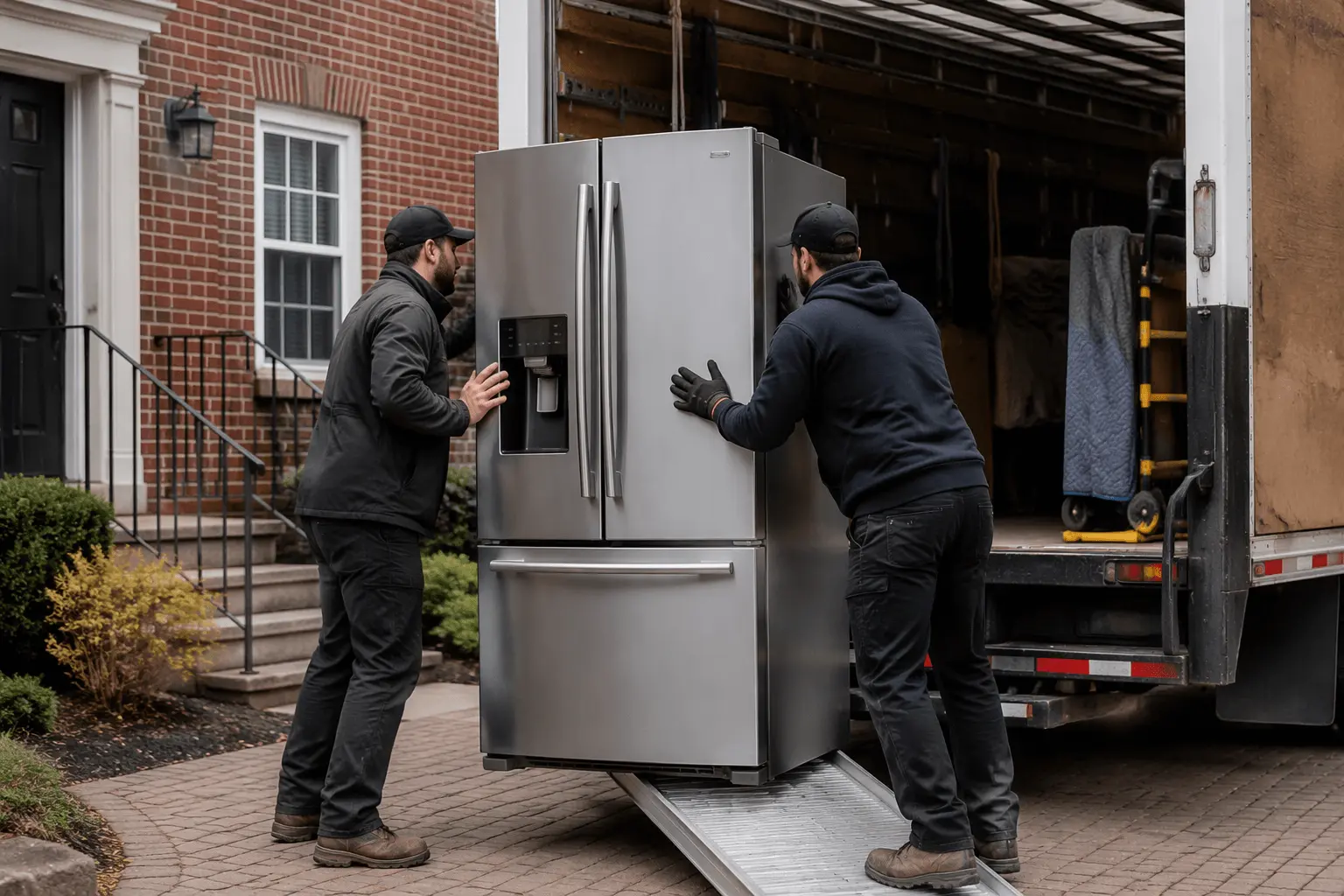
Appliance Disposal in Sacramento: Your Options for Getting Rid of an Old Unit
Retailer haul-away, city and utility programs, scrap yards and refrigerant rules: how to dispose of an old appliance in the Sacramento area.
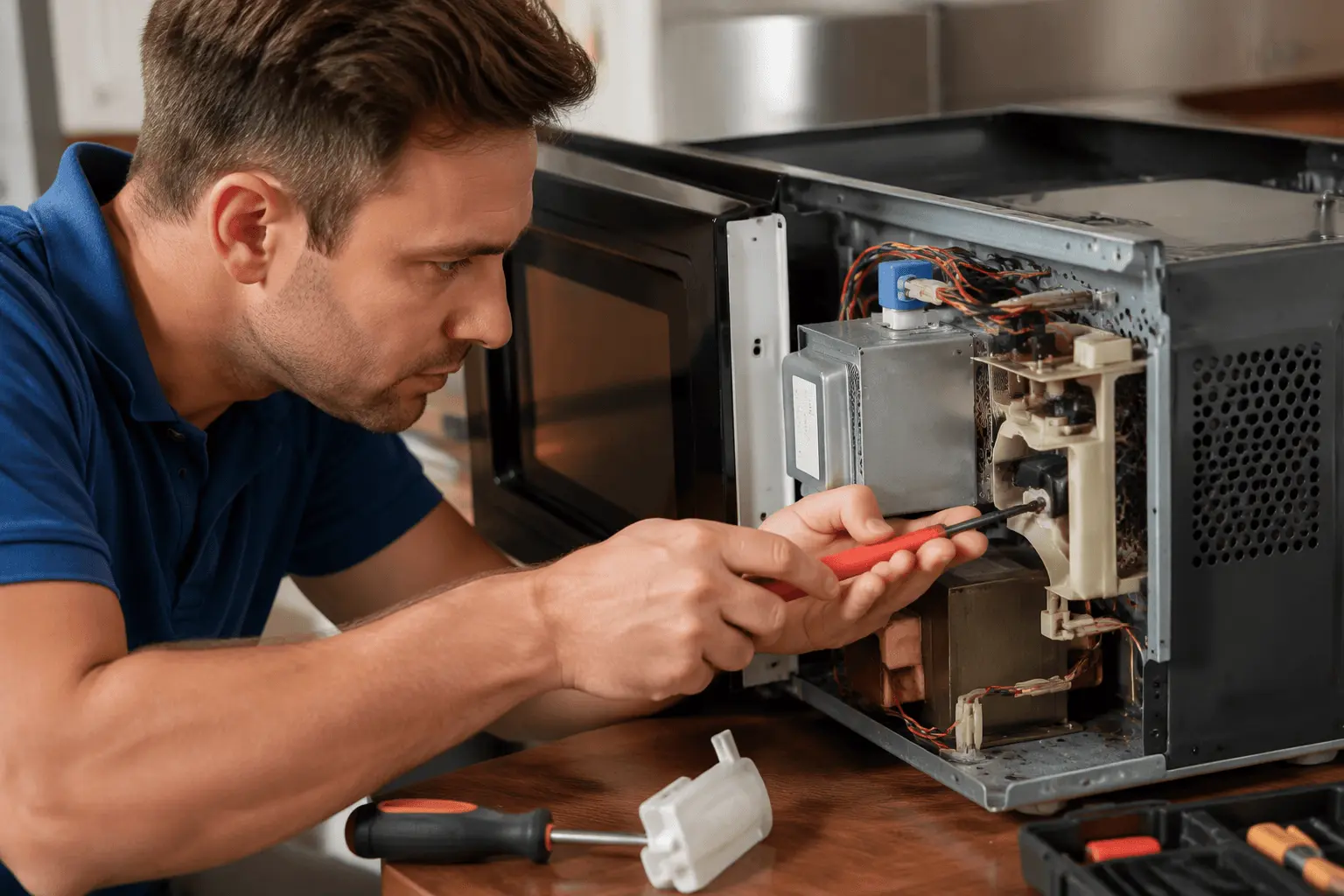
Microwave Not Heating: Fuse, Door Switch and Parts
When a microwave runs but does not heat, the cause is usually a fuse, door switch or high-voltage part. Here is what to check…
Oven and Range Cooking Unevenly: Causes and Fixes
Hot spots, one side browning faster, or burnt bottoms: the usual causes of uneven oven heating and what to check first.