
Dryer overheating and fire prevention: what to check and what never to bypass
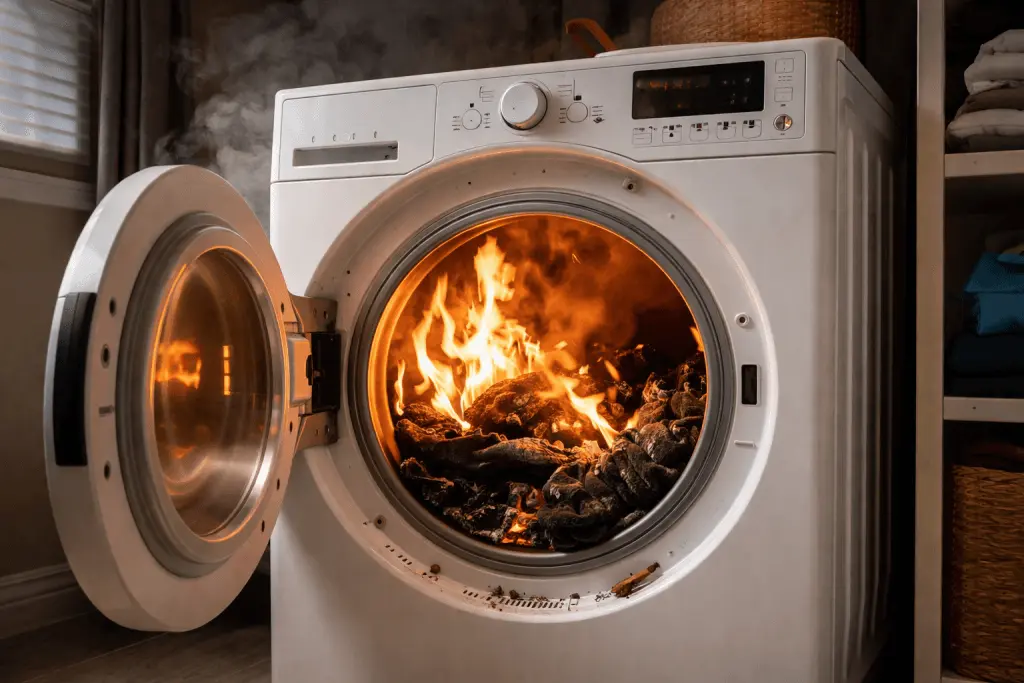
Dryer overheating, whether it shows up as scorched clothes, a hot casing or a burning smell, means the air is not getting out. Nearly every case comes down to restricted airflow. It is also the situation that leads to dryer fires, so treat it seriously. The National Fire Protection Association lists failure to clean as the leading factor in home dryer fires, which matches what technicians see in the field. Its dryer safety tips are short and worth reading.
If you smell burning or see smoke
Stop the dryer, unplug it or switch off its breaker, and keep the door closed so that any fire is starved of air. If there is visible flame, get everyone out and call 911. Do not run the dryer again until the cause is found.
Why dryer overheating happens
A dryer pushes hot air through the drum and out through a vent. When the vent is blocked, the hot air has nowhere to go, the temperature inside climbs, and the safety devices start to trip. The usual causes, in order of likelihood:
- A clogged lint screen, or a screen with a film of fabric-softener residue that blocks air even though it looks clean.
- A clogged, crushed or too-long exhaust duct.
- A blocked outside vent hood, for example the flap is stuck or packed with lint or a bird nest.
- Overloading, which stops air moving through the clothes.
- A failed part inside, such as a stuck thermostat or a worn drum seal that changes the airflow.
Check in this order
1. The lint screen
Clean it after every load. Every few months, wash it with warm water and a little dish soap and a soft brush, then let it dry fully. Hold it up to the light. If water does not run through the mesh, a film is blocking it.
2. The airflow at the outside vent
Run the dryer on air or low heat and go outside to the vent hood. You should feel a strong, steady flow, and the flap should be fully open. A weak flow means a restriction somewhere in the duct, which is the most common cause of dryer overheating. Clear lint from the hood by hand.
3. The duct behind the dryer
Turn the dryer off and unplug it. If it is electric, you can pull it out and look at the duct. Do not move a gas dryer without shutting off the gas supply at its valve first, and leave anything to do with the gas connection to a professional. Check for crushed or kinked sections, loose joints, and lint in the duct. Replace white vinyl or foil accordion duct with a rigid or semi-rigid metal duct, which resists crushing and does not burn the way plastic and foil can. Keep the run as short and straight as you can. Every elbow and extra length cuts airflow, and the dryer manual gives its maximum length.
4. The load
Fill the drum about half to three-quarters full so that clothes can tumble freely. Do not dry rubber-backed items, foam, or anything stained with flammable products such as cooking oil, gasoline or solvents. Fabrics with oil on them can heat up by themselves after drying.
What the thermal fuse and thermostats mean
Dryers have safety devices that cut off the heat when the temperature gets too high. Typically one is a thermal fuse, and others are thermostats. If your dryer runs and tumbles but suddenly produces no heat, one of these may have tripped, and it tripped because of dryer overheating. Replacing the fuse without finding out why it blew just sets up the next failure.
Never bypass, jumper, or tape over a thermal fuse or high-limit thermostat. They are the last protection between a blocked vent and a fire. A technician fixes dryer overheating at its source, the airflow, and then replaces them with the correct part. If your dryer lost its heat, see our guide on signs a dryer needs repair.
Heat and your laundry room
Sacramento summers do not cause dryer overheating on their own. A hot laundry room makes a restricted dryer feel worse, and a closed laundry closet with no air supply can starve the dryer of air. Leave the door open, or vented, while the dryer runs.
Habits that prevent fires
- Clean the lint screen every load.
- Check and clean the vent system at least once a year, and more often if drying takes longer than it used to or you have a long duct run.
- Do not run the dryer when you leave the house or go to sleep.
- Keep the area around the dryer free of boxes, cleaning products and clutter.
- Vent outside, never into a garage, attic or crawl space.
Most dryer overheating is prevented by routine cleaning, so for a regular schedule use our dryer maintenance checklist.
Stop using the dryer and call if
- The outside of the dryer is too hot to touch, or you smell burning with a clean vent.
- A thermal fuse has blown more than once.
- Clothes come out scorched, or the drum paint is discoloured.
- You smell gas. Leave the house, avoid switches and flames, and call your gas utility.
If dryer overheating keeps coming back after the vent is clear, our dryer repair page lists what we service.
If you would rather have a technician look at it, book at /book/ or call (916) 582-7791 and ask for the next available window. The service call is $80, paid at your home or with PayPal or a credit card.
Common questions
Why is my dryer getting so hot?
Restricted airflow is the usual reason: a clogged lint screen, a blocked or crushed vent duct, or a blocked vent hood outside. Check those before suspecting a failed part.
Is it safe to replace a blown thermal fuse myself?
A blown fuse means the dryer overheated, so the cause has to be found first. Never bypass a fuse. If you are not certain the vent is clear and the new part is correct, have a technician do it.
Why does my dryer have no heat but still tumbles?
A tripped thermal fuse, a failed heating element or a bad thermostat can all stop the heat. A blocked vent often causes the fuse to blow, so the vent needs checking too.
How often should a dryer vent be cleaned?
At least once a year, and sooner if clothes take longer to dry or the duct run is long or has many bends.
Related guides
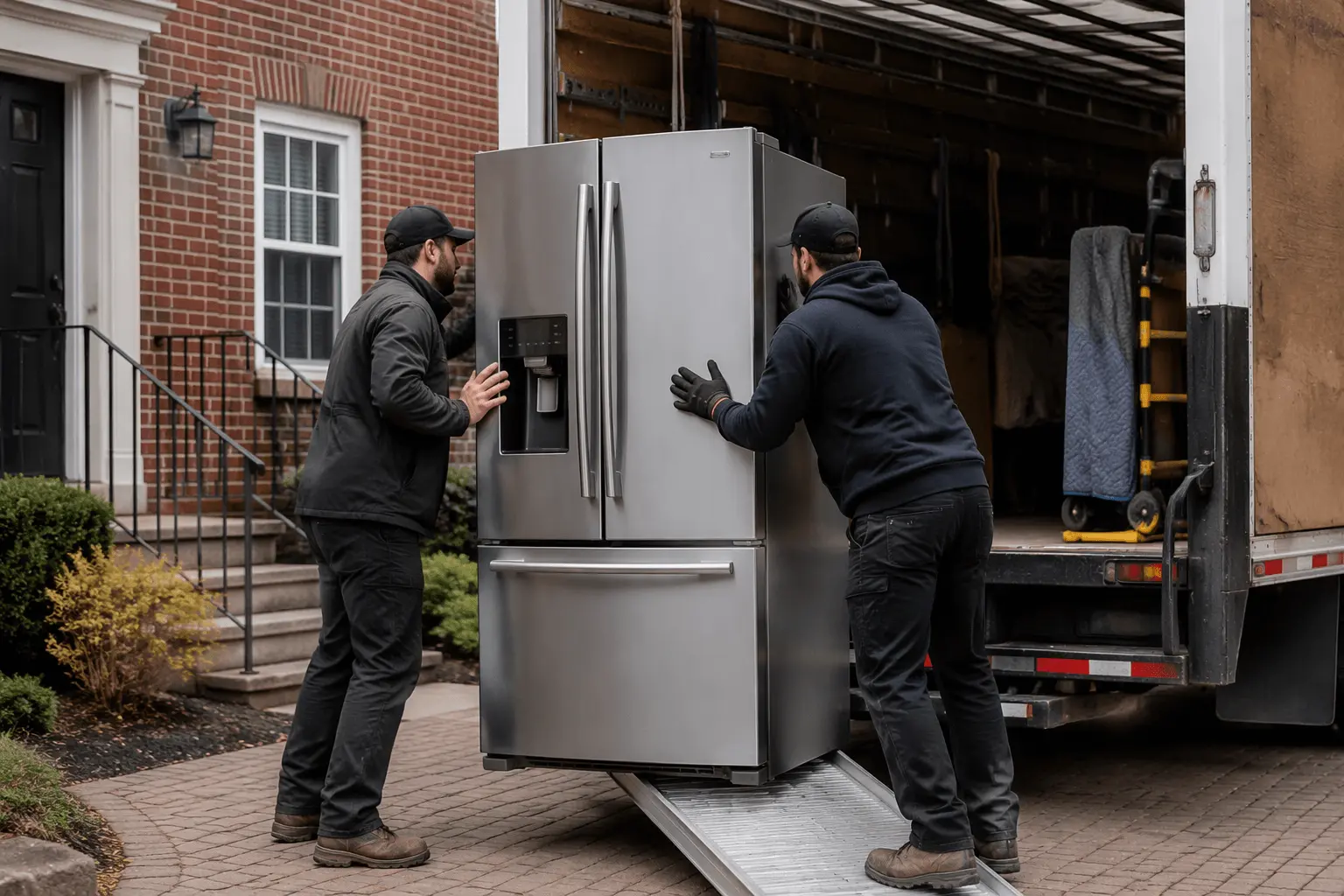
Appliance Disposal in Sacramento: Your Options for Getting Rid of an Old Unit
Retailer haul-away, city and utility programs, scrap yards and refrigerant rules: how to dispose of an old appliance in the Sacramento area.
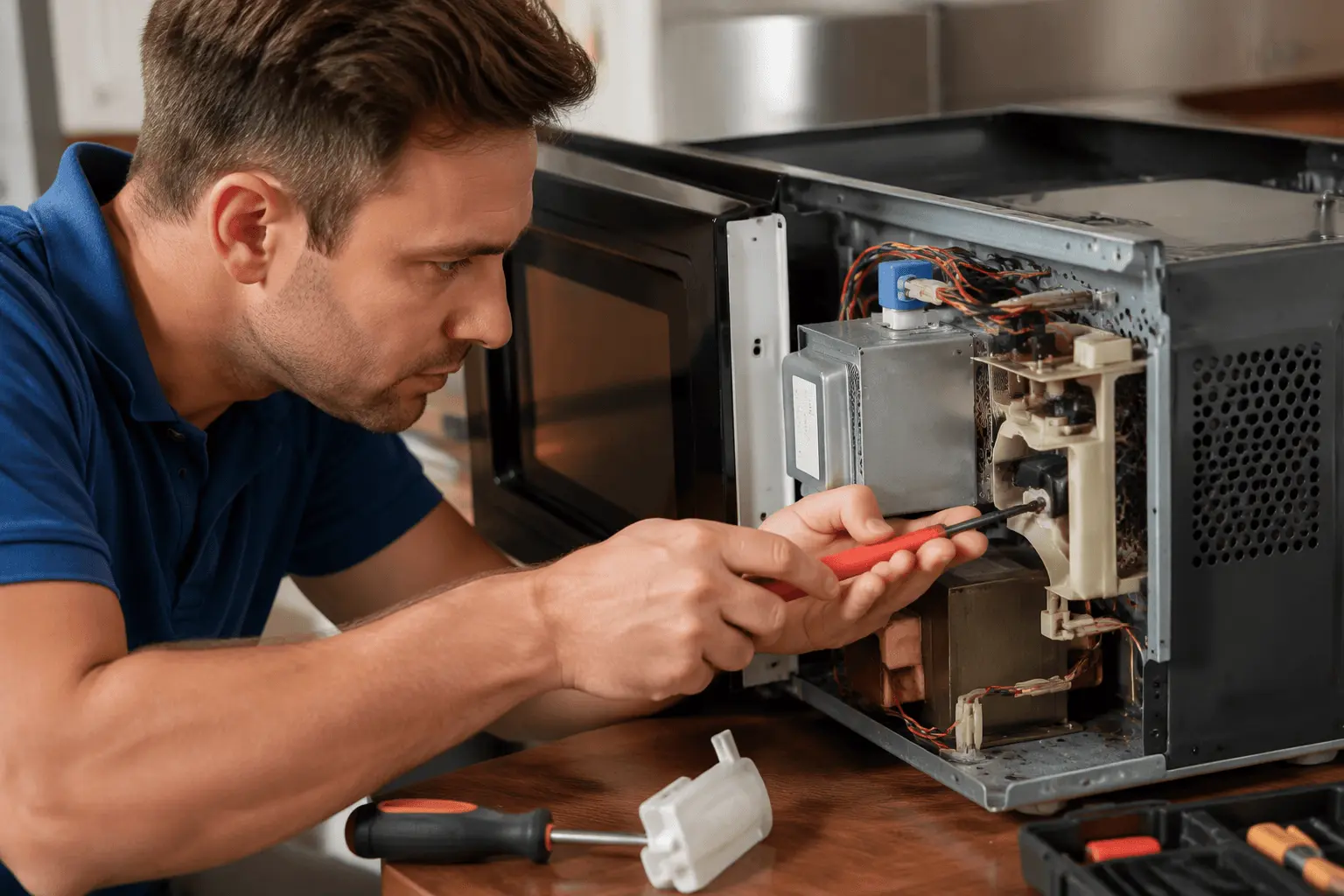
Microwave Not Heating: Fuse, Door Switch and Parts
When a microwave runs but does not heat, the cause is usually a fuse, door switch or high-voltage part. Here is what to check…
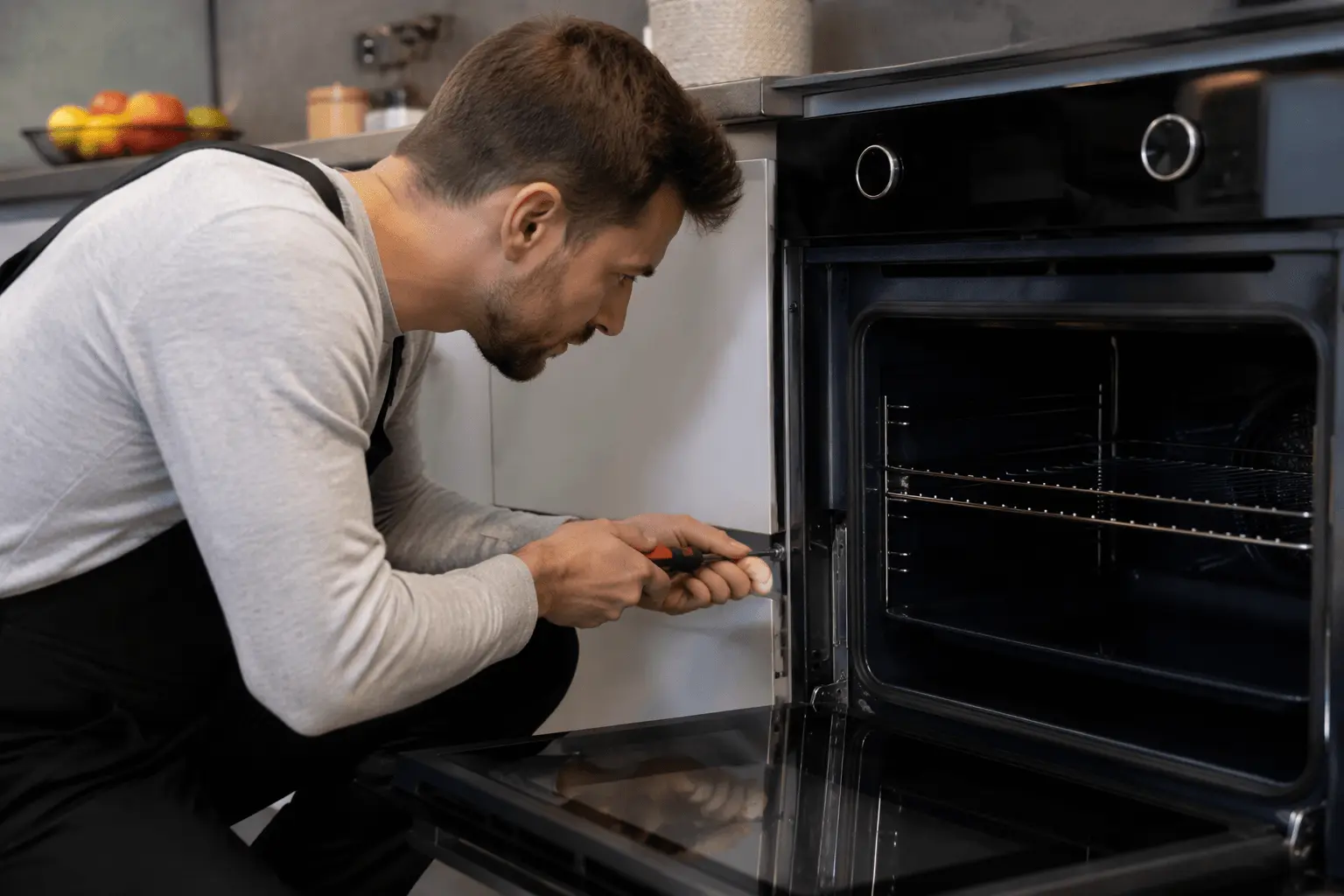
Oven and Range Cooking Unevenly: Causes and Fixes
Hot spots, one side browning faster, or burnt bottoms: the usual causes of uneven oven heating and what to check first.