Common Oven Problems and How to Diagnose Them
Most oven problems come from a small number of faults. If you can match the symptom to the likely part, you can tell a quick fix from a job for a technician. Gas and electric ovens share most of the same oven problems, and where they differ I say so.
Table of Contents
Safety first. Turn an electric oven off at the breaker before touching anything inside it. If you smell gas, leave the house, avoid switches and flames and call the gas utility. Gas valves and gas lines are not for DIY.
Oven does not heat
This is the most common of all oven problems and has its own page, oven not heating. In short: an electric oven usually has a failed bake element or a control fault, and a gas oven usually has a weak igniter. A display that works with no heat in an electric range can also be a half-tripped breaker, since ovens use two 120-volt legs that together make 240 volts.
Oven heats but the temperature is wrong
Wrong temperature is one of the oven problems you can measure yourself. Put an oven thermometer on the middle rack, set the oven to 350 degrees and check it after the oven has cycled for twenty minutes. A difference of 10 to 25 degrees can be a calibration matter, and some ovens let you adjust it from the control. A larger gap points to the temperature sensor, which is a thin probe at the back of the oven. If it touches the wall it can read wrong, and if it is failing its resistance drifts. Cooking too hot or too cool is often a sensor problem. GE Appliances’ range and wall oven FAQ lists typical preheat times and how to check calibration.
Uneven baking
Burnt on one side, raw on the other: look at the racks, the pans and the element first. A bake element that glows only in parts, or a convection fan that does not spin, causes it. We cover this in oven uneven heating.
Oven problems with error codes, or an oven that will not turn off
A flashing code such as F1 or F2 on many ovens refers to a sensor or board fault. Switching off the breaker for a minute may clear a one-time glitch. If the code returns, write it down along with the model number. An oven that stays on after you shut it off is a safety problem. Turn off the breaker and call.
Door problems
- Door does not close flush. Check for a bent hinge or a worn gasket. Heat escapes and the oven works harder.
- Door will not unlock after self-clean. Let the oven cool for an hour or more. If it stays locked, the latch motor or board may be at fault.
- Cracked glass. Stop using the oven. Cracked glass can shatter.
Self-clean problems
Self-clean runs far hotter than ordinary cooking, which is why oven problems on an old oven so often appear during or just after a cycle. A tripped thermal fuse or a stuck latch are typical results. Remove racks and loose food first, and open a window since the smoke can be strong. This is not something to bypass; if the cycle trips a fuse, the fuse is doing its job and the cause needs to be found.
Burner and igniter problems on a range
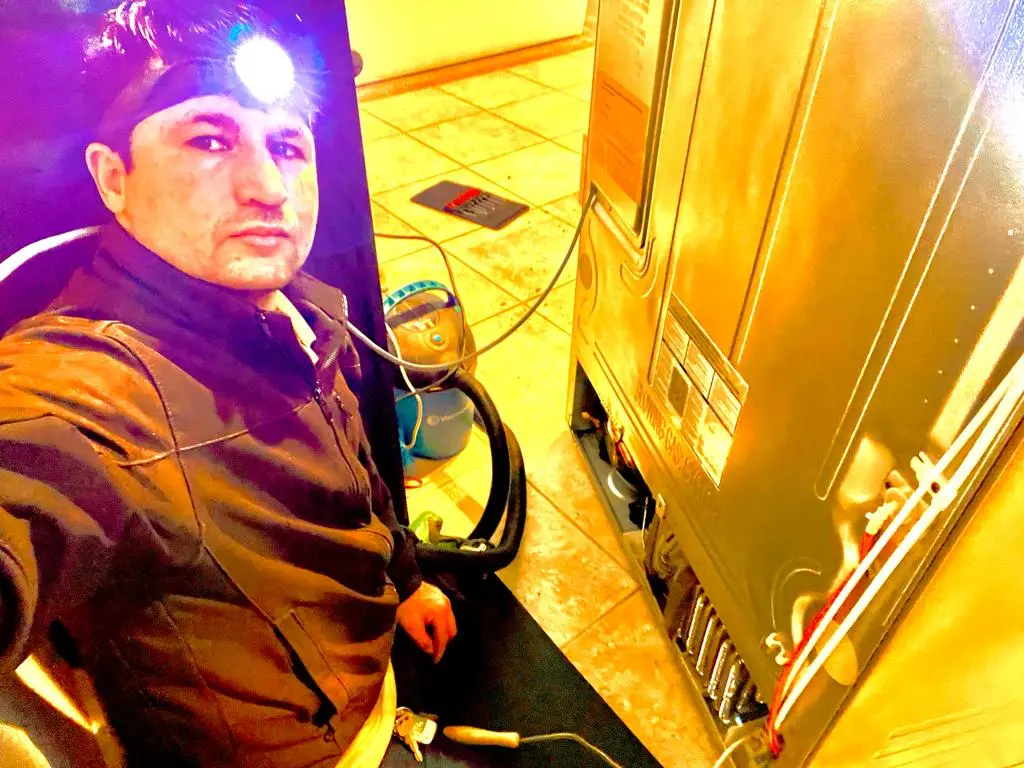
If surface burners click but do not light, moisture or food in the burner ports is the most likely cause. Dry them and clean the ports with a pin. If an oven igniter glows but the burner does not light, the igniter is weak, and weak igniters are a very common failure. See our page on range and stove repair for cooktop faults.
What affects the cost of a repair
For most oven problems, bake elements and igniters are the simpler parts. Control boards and sensors on built-in wall ovens are more involved, and a wall oven needs to be pulled from its cabinet. We give the likely repair after the visit and before work starts.
Stop and call if
- You smell gas.
- The oven will not turn off.
- You see sparks, scorching or a melted wire.
- The breaker keeps tripping.
Otherwise, if these oven problems do not clear, our oven repair service covers Sacramento and nearby communities. Book at /book/ or call (916) 582-7791.
Common questions
How do I know if my oven temperature is accurate?
Use a separate oven thermometer on the middle rack and compare it with the set temperature after the oven cycles. A small difference can often be adjusted in the control settings.
Why does my oven display work but it will not heat?
In an electric range, one half of the 240-volt supply may be lost, or the bake element has failed. Check the breaker, and if it is fine, the element or control needs testing.
Is it safe to use an oven with a cracked door glass?
No. Stop using it, since cracked glass can break when it heats.
Why won't my oven door unlock after self-cleaning?
It stays locked while hot. Wait until it has cooled completely. If it stays locked, the latch or control needs service.
Related guides
Oven and Range Cooking Unevenly: Causes and Fixes
Hot spots, one side browning faster, or burnt bottoms: the usual causes of uneven oven heating and what to check first.
Oven and Range Installation: Sizes, Power, Gas and Safety Checks
Cutout size, 240V power or gas, anti-tip brackets and clearance: the questions to settle before a new oven or range arrives.
How to Choose the Right Oven for Your Kitchen
Gas or electric, wall oven or range, standard or convection: check size, power and features before you buy.