
Refrigerator Not Cooling: Causes and Fixes
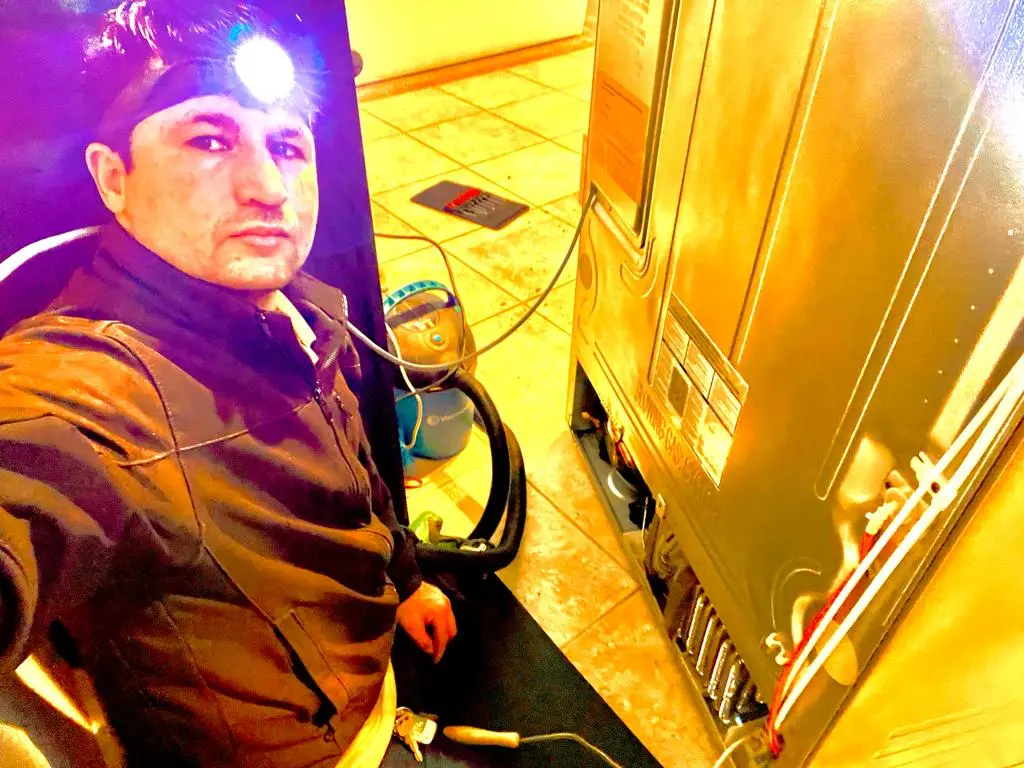
A refrigerator not cooling is rarely a total mystery. Most of the time the cause falls into one of three groups: something simple around the fridge, a part that moves air, or a part that controls the cooling cycle. Work through them in that order and you will either fix it or be able to tell a technician exactly what you saw.
Table of Contents
First, decide how warm it really is
Put a thermometer in a glass of water on the middle shelf and leave it for several hours. The fridge side should sit at or below 40°F, and the freezer near 0°F. If the water is only a few degrees high, your refrigerator not cooling is most likely a setting or airflow problem. If the food is clearly warm and the freezer is soft, something bigger has failed.
Safe checks for a refrigerator not cooling
- Power. Is the interior light on? If not, check the outlet with a lamp and look at the breaker. A tripped GFCI outlet in a garage or utility room is a common culprit for a fridge in that spot.
- Temperature setting. Dials and touch panels get bumped when someone cleans or loads groceries. Set the fridge to about 37°F and give it 24 hours before judging.
- Door and gasket. Close the door on a strip of paper. If it slides out with no drag, the seal is weak at that spot. A door held open by a tall bottle or a bin that does not sit flat will do the same thing.
- Airflow inside. In most modern fridges the cold air is made in the freezer and pushed into the fridge through a vent. If boxes are pressed against that vent, the fridge side warms up while the freezer stays fine.
- Space around the unit. A fridge pushed tight against the wall or boxed into a cabinet that is too snug cannot shed heat.

Then look at the coils and fan
Unplug the refrigerator first. The condenser coils are either on the back or behind the bottom front grille. Dust and pet hair on them make the compressor run longer and can leave a refrigerator not cooling properly in warm weather. A coil brush and a vacuum, with the fridge unplugged, is the right tool. Our article on keeping a refrigerator running efficiently covers coil cleaning in more detail.
With the power back on, listen. You should hear a fan near the compressor at the bottom rear, and often a second fan behind the freezer wall. If the compressor runs but the freezer fan is silent, the evaporator fan may have failed. If the fan is fine but the freezer wall is covered in frost, see the next section.
What the symptom usually points to
A refrigerator not cooling on both sides is a different problem from one that is only warm in the fridge section, so note which you have before reading the table.
| What you see | Most likely cause |
|---|---|
| Freezer cold, fridge warm | Blocked vent, failed evaporator fan, or a stuck damper |
| Both warm, compressor runs constantly | Dirty coils, failed condenser fan, or a sealed-system problem |
| Both warm, a click every few minutes and no hum | Start relay or overload device on the compressor |
| Thick frost on the freezer back wall, both sides warm | Failed defrost system (heater, thermostat or control) |
| Nothing runs, lights work | Control board, temperature sensor or compressor |

The defrost problem
Every few hours the fridge warms its evaporator briefly to melt frost. If the heater, the defrost thermostat or the control that triggers it fails, frost builds until it blocks the airflow. You can confirm it: if you empty the fridge, unplug it with the doors open for a day, and it cools normally for a few days after, a defrost fault is very likely. That is a temporary reset, not a repair, and the food must be kept cold elsewhere meanwhile.
When to stop
- You smell burning or see scorch marks near the compressor or cord. Unplug it and call.
- The compressor is hot, clicks, and shuts off repeatedly. Do not keep plugging it back in.
- You find an oily patch or hear hissing near the coils, which can mean a refrigerant leak. Sealed-system work is for technicians.
- You are about to remove a panel to reach the heater or board. Those parts are live when the fridge is plugged in.

Food safety while you decide
With a refrigerator not cooling, keep the doors shut. A closed fridge holds its cold for roughly four hours, and a full freezer longer, according to USDA guidance. Discard perishable food that has been above 40°F for more than two hours in total.
What affects the repair decision
Without quoting numbers, the main cost drivers are the age of the fridge, whether the failed part is a simple fan or a sealed-system component, and whether the unit is built in. With a refrigerator not cooling, a good diagnosis tells you which one you have before you spend anything on parts. Details of what we repair are on our refrigerator repair page, and if the unit has been struggling for a while, why timely repairs matter explains how small faults grow. For general upkeep advice, see the U.S. Department of Energy’s Guide to Kitchen Appliances.
If you would rather have it looked at, book at /book/ or call (916) 582-7791 and ask for the next available window. The service call is $80, paid at your home or with PayPal or a credit card.
Still dealing with refrigerator not cooling? A technician comes to your home and finds the cause. See the pricing page for the service call, or book a visit for refrigerator not cooling.
Common questions
Why is my freezer cold but the fridge warm?
Cold air is made in the freezer and sent to the fridge through a vent and damper. A blocked vent, a failed evaporator fan or a stuck damper stops that flow. Check for food against the vent first.
How long should I wait after changing the temperature setting?
Give it a full 24 hours. Judging after an hour will lead you to keep turning the dial colder than needed.
Is it safe to keep food in a fridge that is not cooling?
Only for a short time. Keep the door closed, and throw out perishable food that has been above 40 degrees F for more than two hours.
Can a dirty condenser coil really stop a fridge cooling?
It rarely stops it outright, but it makes the compressor work harder and can leave the fridge warm in hot weather. Cleaning the coils with the fridge unplugged is a safe first step.
Related guides
Refrigerator Leaking Water: Causes and Fixes
Where the water pools tells you where it comes from. Check the defrost drain, water line, filter and drain pan in a safe order.
Refrigerator Maintenance: Coils, Cleaning and Hot-Weather Efficiency
A practical routine for keeping a refrigerator efficient: clean the coils, check the gaskets and drain, set temperatures correctly and ease the load in…
Refrigerator Runs Constantly: What to Check
Is your refrigerator running all the time? Learn what is normal, what to check in order, and which signs mean it is time to…