
Refrigerator Leaking Water: Causes and Fixes
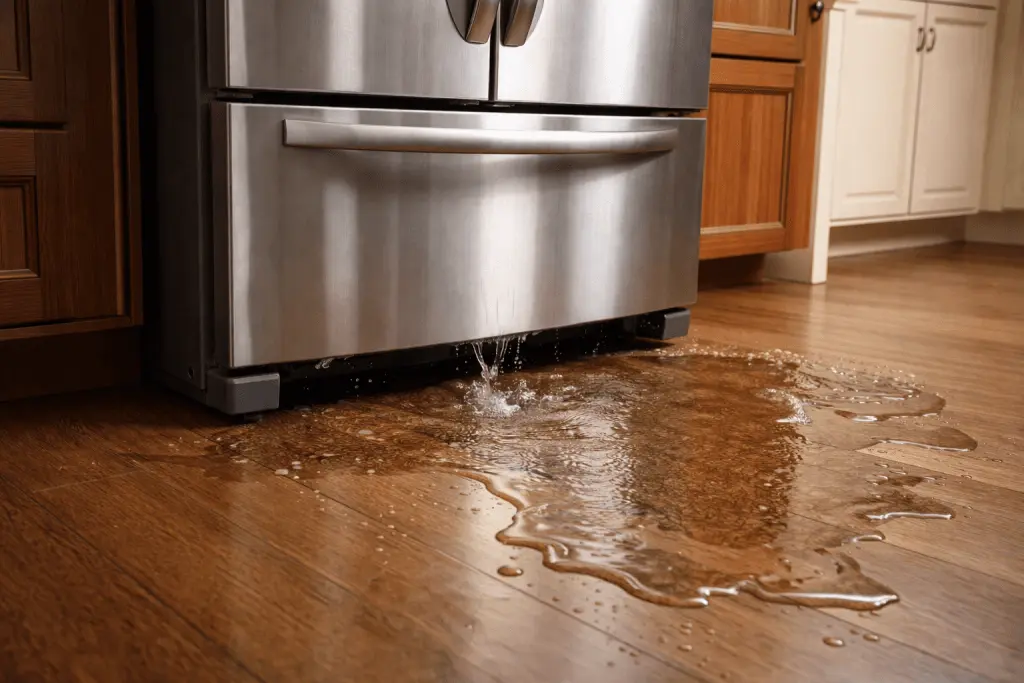
The most useful clue with a refrigerator water leak is where the water shows up. Water inside the fridge, a puddle at the front, and a slow trickle at the back each point to a different part. Find the location first, then work through the likely cause.
Table of Contents
Before you trace a refrigerator water leak
Pull the plug before you pull the fridge out, and mop up the floor so you can see fresh water appear. If the fridge has a water line, switch off the supply valve behind or under it when you suspect that line. Do not run a damp, leaking cord or work with wet hands near the outlet.
Water inside the fridge or under the crisper drawers
This is almost always a clogged defrost drain. During each defrost cycle, melted frost runs down a small channel at the back of the freezer and out through a drain tube to a pan under the fridge. When food debris or ice blocks that channel, the water backs up, spills into the fridge and sometimes freezes into a sheet on the freezer floor.
What to try: empty the freezer shelves, find the drain hole at the back, and flush it with warm (not boiling) water using a turkey baster. A little baking soda in the water helps with residue. If the freezer floor is iced over, unplug the fridge and leave the doors open until the ice melts, with towels down. If the drain clogs again within weeks, the heater or the drain tube itself needs a technician. Our freezer not freezing and icing up article covers the same defrost system.
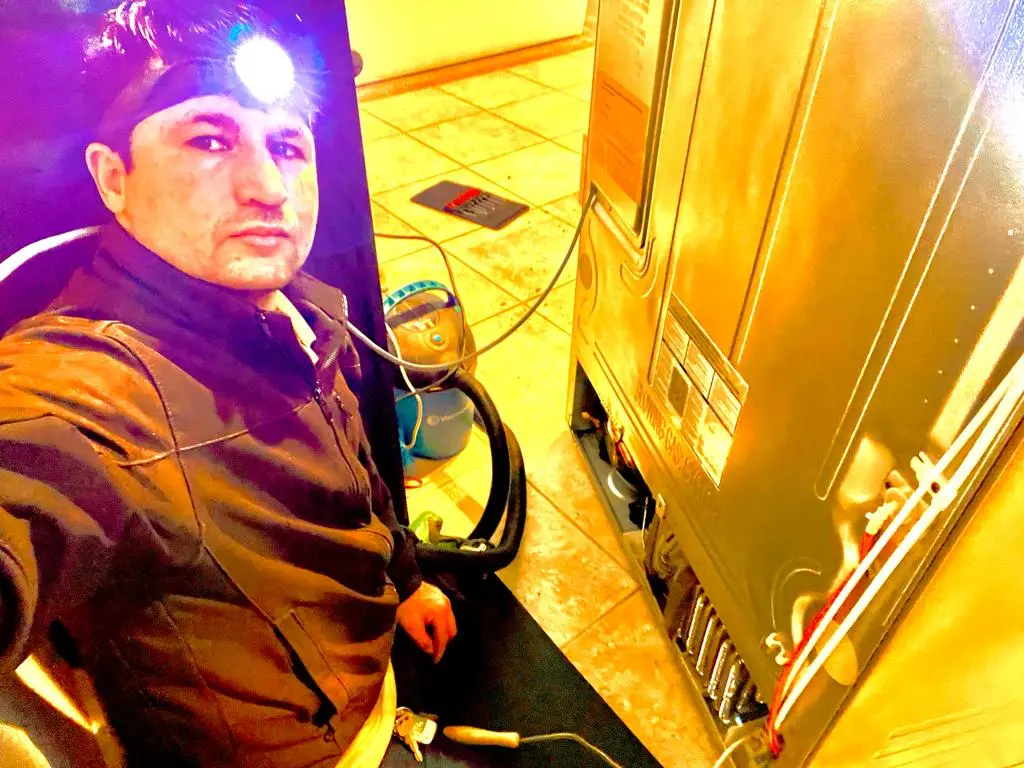
Puddle at the front or under the middle
Look at the drain pan. It sits under the fridge, usually behind the bottom grille, and catches defrost water that then evaporates. If the pan is cracked, tilted, or the fridge has been shifted so it no longer sits where it should, water reaches the floor. A fridge that is not level front to back, with the front slightly higher so the door closes by itself, can also push water toward the front.
Water at the back or along the wall
A refrigerator water leak at the back often comes from the supply line to the ice maker or dispenser, so trace that line from the wall. Check:
- The saddle valve or shutoff at the wall for drips.
- The compression fittings at each end of the line. A quarter turn sometimes stops a drip.
- The line itself for kinks, cracks, or a spot rubbed through where it touches the cabinet.
- The inlet valve at the bottom rear of the fridge. A valve that weeps will make a steady dribble even when nobody is using the dispenser.
Plastic tubing that is brittle or yellowed is due for replacement. Many people use thin plastic lines; a braided stainless line is a more forgiving choice, but follow your fridge maker’s instructions on what to use.
Leak at the dispenser or door
A drip from the dispenser nozzle after use is often air or a bit of ice stuck in the line, and clears after running a couple of cups. If it keeps dripping, suspect the inlet valve. Water dripping from the door area can also come from a water filter that has not seated fully. Remove it, check the O-rings, and refit it until it locks. If the filter housing is cracked, replace the housing; do not tape it.
Condensation that looks like a leak
Not every refrigerator water leak is a plumbing fault. In humid weather, a door that does not seal can sweat on the outside edge and drip. If the water is on the gasket side and the gasket is torn or stiff, that is a sealing fault rather than a plumbing one. A paper strip test across the door will show weak spots.

When to stop and call
Call about a refrigerator water leak if any of these apply:
- Water has reached the electrical outlet, the cord, or the compressor area.
- The floor under the fridge is damaged or soft. Stop using the water line until it is fixed.
- A drain flush does not clear the blockage after two tries.
- The leak returns after you replaced the filter and tightened the lines.
A quick decision order for a refrigerator water leak
- Unplug, turn off the water, dry the floor.
- Inside the fridge: check the defrost drain.
- Front or underneath: check the pan and levelling.
- Back: follow the water line and valve.
- Dispenser: check the filter seating, then suspect the valve.
If your refrigerator water leak turns out to be a valve, heater or drain tube, we handle those on our refrigerator repair visits. A fridge that has also stopped cooling may have a related fault, so see refrigerator not cooling as well. The U.S. Department of Energy’s Guide to Kitchen Appliances has general upkeep advice for refrigerators and ice makers.
If you would rather have it looked at, book at /book/ or call (916) 582-7791 and ask for the next available window. The service call is $80, paid at your home or with PayPal or a credit card.
Common questions
Why is there water at the bottom of my fridge?
Usually a clogged defrost drain. Melted frost cannot run out, so it pools in the fridge or freezes on the freezer floor. Clearing the drain with warm water often fixes it.
Can I use boiling water to unclog the defrost drain?
No. Boiling water can warp the plastic drain parts. Use warm water and a baster.
Why does my fridge leak only when the ice maker runs?
That points to the water supply: a loose fitting, a cracked line, or an inlet valve that is not shutting fully.
Is a leaking fridge dangerous?
It can be if water reaches the outlet or cord. Unplug it and shut off the water before investigating.
Related guides
Refrigerator Not Cooling: Causes and Fixes
A step-by-step order for checking a refrigerator that has stopped cooling, what each symptom usually means, and when to stop and call a technician.
Refrigerator Maintenance: Coils, Cleaning and Hot-Weather Efficiency
A practical routine for keeping a refrigerator efficient: clean the coils, check the gaskets and drain, set temperatures correctly and ease the load in…
Refrigerator Runs Constantly: What to Check
Is your refrigerator running all the time? Learn what is normal, what to check in order, and which signs mean it is time to…