
Dishwasher Installation: What to Check Before Delivery Day
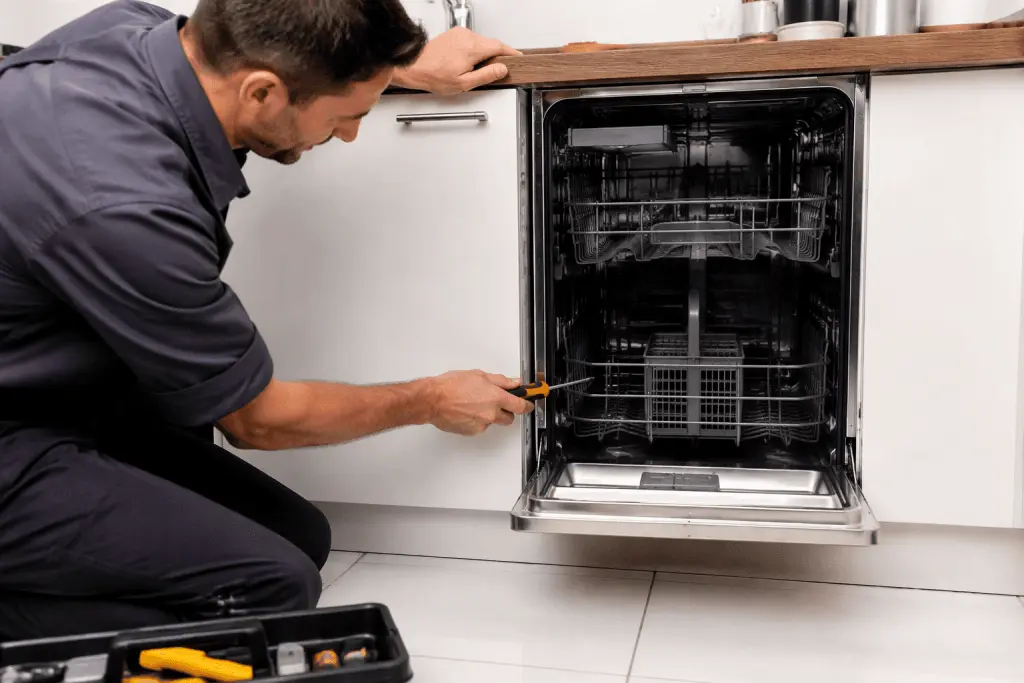
Most dishwasher installation problems are decided before the machine shows up: the opening is the wrong size, the old shutoff valve is stuck, or no outlet is in reach. A half hour of checking the day before saves a second visit. This is the dishwasher installation list I would go through in your kitchen.
1. Measure the opening
A standard built-in dishwasher is about 24 inches wide and fits an opening that is roughly 24 inches wide, 24 inches deep to the wall and about 34 inches tall under the counter, with a little height adjustment in the feet. Measure the width at the top and bottom, the height from the floor to the underside of the counter, and the depth. Compare these with the installation sheet for your model, which you can find on the manufacturer’s site or in the box. Some models are taller, some need extra clearance for the door to swing past a cabinet handle, and a few slim models are 18 inches wide.
If the floor is tile and the new floor is higher than the old dishwasher’s floor, the machine may no longer fit under the counter. Measure after any recent flooring work.
2. Check the three connections
Power
Most dishwashers use a 120-volt circuit. Some are hardwired and others have a power cord and plug into an outlet under the sink. Look at the model’s installation sheet to see which is expected. The outlet must be reachable but not directly behind where the dishwasher sits. If there is no power at the right spot, an electrician has to add it. Turn the circuit off at the breaker before anyone works on wiring.
Water supply
The supply comes from a shutoff valve under the sink, usually on the hot line. Open and close it. If it is corroded or will not turn all the way, replace it before the install, not during. Old valves can break when turned. The fitting at the dishwasher uses a small elbow and a braided or copper line. Most manufacturers recommend water of at least 120 degrees Fahrenheit at the machine, so run the tap and confirm it gets properly hot.
Drain
The drain hose needs a high loop, fastened up under the counter, or an air gap on the sink. This stops dirty sink water from running back into the tub. If the drain hose joins a garbage disposal, the knockout plug inside the disposal’s dishwasher inlet has to be removed or water will not leave the machine. This is the single most common reason a dishwasher installation fails its first run. KitchenAid’s own help page for a newly installed dishwasher that will not drain lists the same plug and hose checks. Check your local code for whether an air gap or a high loop is required.
3. Clear the path
Dishwasher installation day goes faster when the path is clear. Measure the doorway and hallway. A dishwasher is heavier than it looks, and removing the old unit leaves a messy space. Clear the floor in front, and tell the installer about any step, narrow turn or pets that need to be out of the way.
4. Decide what stays
Ask what the dishwasher installation includes: whether the installer will haul away the old unit, replace the hoses and fittings, and install a new power cord. Many installers use a kit with a new supply line, a drain fitting and a cord. Reusing a cracked, stiff or discolored hose is a common cause of leaks later.
5. After the dishwasher installation
Run a short cycle and watch for leaks at the supply connection, behind the kick plate and at the door seal. Check that the machine is level side to side, since a tilted tub drains poorly and leaves the door misaligned. Look under the sink an hour after the cycle, again the next day.
Common questions
People ask whether the new dishwasher can go in a different spot. It can only move if a supply, a drain and power are all available there, and that is a plumbing and electrical change, not a simple swap. If your cabinets are non-standard, bring the model number to the appointment.
If a new machine misbehaves right after dishwasher installation, check the high loop and the disposal plug first. Our dishwasher troubleshooting guide covers drain and start problems. If you are deciding whether to replace an old unit at all, see signs it is time for a new dishwasher.
We handle dishwasher installation through our appliance installation service in Sacramento and nearby communities. When you are ready, book at /book/ or call (916) 582-7791 and ask about the next available window.
Common questions
What size is a standard built-in dishwasher?
About 24 inches wide, with an opening about 24 inches wide and roughly 34 inches tall under the counter. Always check your model's installation sheet for exact dimensions.
Do I need an air gap?
It depends on local code and the setup. Many installations use a high loop in the drain hose instead. We check which applies at your address.
Why is my new dishwasher not draining?
The most common cause is a disposal knockout plug that was not removed. A kinked drain hose is the next most common.
Can the dishwasher plug into a regular outlet?
Some models come with a cord and plug into an outlet under the sink, and others are hardwired. Follow the installation sheet for your model.
Related guides
Appliance Disposal in Sacramento: Your Options for Getting Rid of an Old Unit
Retailer haul-away, city and utility programs, scrap yards and refrigerant rules: how to dispose of an old appliance in the Sacramento area.
Microwave Not Heating: Fuse, Door Switch and Parts
When a microwave runs but does not heat, the cause is usually a fuse, door switch or high-voltage part. Here is what to check…
Oven and Range Cooking Unevenly: Causes and Fixes
Hot spots, one side browning faster, or burnt bottoms: the usual causes of uneven oven heating and what to check first.